

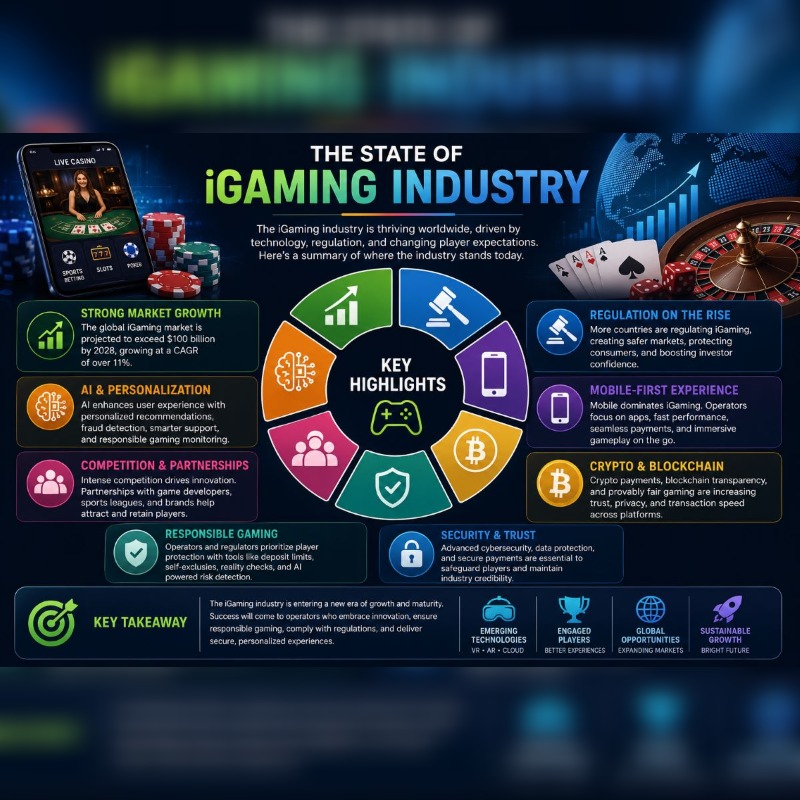
The State of the iGaming Industry
At Cyber Gear we have been monitoring the iGaming industry since 1996.
The global iGaming industry continues to experience remarkable growth, driven by technological innovation, increasing internet penetration, widespread smartphone usage, and evolving consumer preferences. Encompassing online casinos, sports betting, poker, bingo, esports wagering, and fantasy sports, the iGaming sector has transformed into one of the fastest-growing segments of the digital entertainment economy. As the industry moves through 2026, operators are focusing on innovation, responsible gaming, regulatory compliance, and personalized customer experiences to remain competitive.
One of the primary drivers of the industry’s growth is the increasing legalization and regulation of online gambling across multiple jurisdictions. Governments are recognizing the economic benefits of regulated iGaming markets through taxation, licensing fees, and job creation while ensuring stronger consumer protection. Although regulations vary significantly between countries, the trend toward regulated markets has increased investor confidence and encouraged international expansion by leading operators.
Mobile gaming remains the dominant force within the iGaming ecosystem. Today’s players expect seamless gaming experiences across smartphones and tablets, prompting operators to adopt a mobile-first strategy. Responsive websites, dedicated mobile apps, and optimized payment systems have significantly improved accessibility. The rollout of high-speed 5G networks has further enhanced live betting, real-time casino games, and high-definition streaming, creating smoother and more immersive experiences.
Artificial Intelligence has become a critical component of modern iGaming platforms. AI enables operators to personalize game recommendations, detect fraudulent activity, optimize customer support through intelligent chatbots, and identify problematic gambling behaviors. Machine learning algorithms analyze player activity to provide customized promotions and improve player retention while supporting responsible gaming initiatives by detecting unusual betting patterns.
Live dealer casinos continue to gain popularity by combining the convenience of online gaming with the authenticity of physical casinos. High-definition video streaming, professional dealers, and interactive features provide players with a more engaging experience. Many operators are expanding their live casino offerings with localized tables, multilingual dealers, and innovative game formats to appeal to global audiences.
Cryptocurrency and blockchain technology are also reshaping the iGaming landscape. Many platforms now accept digital currencies, providing faster transactions, enhanced privacy, and lower processing fees. Blockchain-based gaming introduces greater transparency through provably fair gaming systems, allowing players to verify game outcomes independently. While adoption continues to grow, regulatory frameworks surrounding cryptocurrency gambling remain under development in many regions.
Responsible gaming has become a top priority for regulators and operators alike. Modern iGaming platforms offer tools such as deposit limits, wagering controls, self-exclusion programs, reality checks, and affordability assessments. AI-powered monitoring systems help identify players who may be at risk of gambling-related harm, allowing operators to intervene proactively. Stronger responsible gaming measures are becoming essential not only for regulatory compliance but also for maintaining public trust.
Competition within the industry has intensified significantly. Established global brands now compete alongside emerging regional operators, creating a highly dynamic marketplace. Success increasingly depends on user experience, game variety, customer service, localized content, payment flexibility, and innovative loyalty programs. Partnerships with game developers, sports leagues, and entertainment brands have become important differentiators in attracting and retaining customers.
Cybersecurity continues to be a major focus as operators handle large volumes of financial transactions and sensitive customer data. Investment in encryption, identity verification, fraud prevention, and secure payment technologies has become essential. Compliance with international data protection standards further strengthens consumer confidence and protects operators from regulatory penalties.
Looking ahead, the future of iGaming will likely be shaped by emerging technologies such as virtual reality (VR), augmented reality (AR), cloud gaming, and AI-driven automation. These innovations promise more immersive, social, and personalized gaming experiences. Cross-platform integration, gamification, and interactive community features are also expected to play larger roles in player engagement.
The iGaming industry is entering a new phase of maturity characterized by innovation, regulation, and customer-centric growth. Operators that successfully balance technological advancement with responsible gaming, regulatory compliance, and cybersecurity will be best positioned to capitalize on expanding global opportunities. As digital entertainment continues to evolve, iGaming is expected to remain a significant contributor to the global online economy, offering exciting opportunities for businesses, investors, and players alike.
Content by GuestPosts.biz